Ian and I both grew up in the Isle of Man. Ian was seven years older than me so I don’t have any memories of his early childhood but a frequently repeated tale was how my mother took him shopping in the pram and returned home without him. He was very close to our grandfather, who, unfortunately, I never knew as he died shortly before I was born. We both spent much of our days with our grandmother who ran a boarding house. This involved many chores most of which Ian avoided, aided and abetted, by our nan who had a very clear idea of women’s work and usually meant double work for me. Ian would escape to his space in the attic, climb in his hammock and lose himself in his current book. He could ignore any summons to help by citing he hadn’t heard. When he was eight he had meningitis which left him permanently deaf in his left ear – a mixed blessing – useful when he didn’t want to hear but not so good in later life when he found it difficult to join in large social groups.
His early passion was for model aeroplanes so gifts were always easy. One time he had just completed building a large glider and I badgered him into letting me go with him to fly it. As he was taller than me, he could see over the hedges and pointed out there was a bull in a field we were passing. Being inquisitive I wanted to see it, so I clambered up the hedge completely forgetting I was carrying the fragile wings. We didn’t manage to complete a flight that day and although he eventually forgave me, no further invites to go with him were forthcoming.
His other great hobby at that time was photography. He managed to get a part job with a local photographer whilst still at school and used to develop his own photographs in an improvised dark room in the garden shed.
Although Ian was always academic, he also played hockey and was captain of the school second eleven. I don’t think I ever saw him play but I do remember him returning home from practice one afternoon with an enormous egg-shaped lump on his forehead: he tried to take a short-cut home over the school fence, caught his trouser leg on the spike and got acquainted with the wall supporting the railings.
He had two main partners in crime growing up, Martin and Alec, who lived near our grandmother. We all (including me) used to play football in the back lane usually with me in goal. The highlight of the year for the boys was Bonfire Night – the preceding weeks building the bonfire and Guy and collecting money for fireworks. One year, Alec’s family donated an old armchair for the guy. I happened to be sitting in it alongside when they raced it over to the bonfire – I was never quite sure how they managed to avoid breaking my ankles on that dash down the lane. I actually spent Bonfire Night itself under the table with Rex the dog as I knew they were going to be throwing bangers around and I wasn’t too keen on being anywhere close.
Ian was the brains of the family He gained a bursary to study biochemistry at Liverpool University when he was just 17. He came home in the holidays and in the summer worked as a conductor on the Manx Electric Railway; student jobs were plentiful and well paid then as the island had a healthy tourist industry. The other time I remembering him being home mid-term was when I broke my wrist and he came back to make sure I was all right; evidence of the caring side of his nature, or maybe he just fancied being spoilt by his grandmother, but you didn’t undertake a winter sailing across the Irish Sea if you didn’t have to. It was while he was at university, he joined the CND as this was the student issue of the day. This was an indication of where his political interests lay.
He was denied a first class honours degree because the university had awarded too many, which really annoyed him, but as he eventually left Liverpool with a PhD in biochemistry it became irrelevant. After gaining his degree, Ian moved to London to work and we didn’t see quite so much of him. He got on well with our uncle John who was also working in London at his time, but I don’t know much about this period other than he worked at the Maudsley. During this time he met and married Sylvia and shortly after Heather came along. After he and Sylvia parted, Heather and her family were the focus of his life. He took great pleasure in watching his granddaughters perform in their local amateur dramatic productions. Time spent with them was when he was happiest.
We actually saw more of him when his marriage ended than we did before. He used to come up to Manchester for the odd weekend. We were travelling for long periods at this time and I was quite surprised and pleased when he came out to Munich for a visit. We had an enjoyable week visiting historic sites, bierkellers etc. and he was most impressed with my ability to navigate the transport systems of trams, trains and buses using the German I’d acquired.
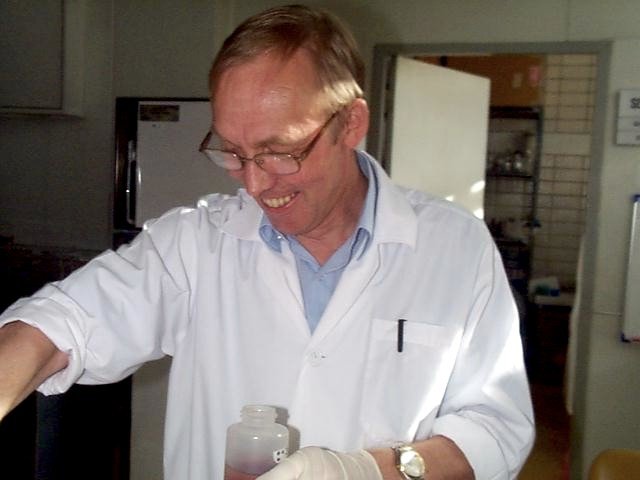
He left the Maudsley to become the principal biochemist for N.E.T.R.I.A. which was a unit that did research and sent out assay materials to hospitals in the North East Thames region. He did all the radioactive work here untill it closed in 2000. He worked with foreign PhD students and it was here he met, Jim, a student from Bangkok. They enjoyed some time together before she had to return to Thailand and was probably instrumental in him accepting a post with N.E.T.R.I.A. in Bangkok for six months. This was a very happy period in his life. He obviously got the travel bug as he later went to work for the Atomic Energy Agency in Cairo as technical cooperation expert liaison which he also seemed to enjoy. He took similar training delivery posts in Damascus and Kuwait. He was never at a loose end as he published many and varied research papers. When N.E.T.R.I.A. closed in 2000 he took early retirement but wasn’t yet ready to get out his carpet slippers. He did a variety of jobs working as a volunteer at a local garden centre, working in the library and also as a lab technician in local secondary schools. He even took an EFL qualification so he could teach English to foreign students. Although he’d been training post-grad’ science students, this was a different prospect and I was never sure this was the right move for Ian. He came to realise it too, but he deserves full marks for trying.
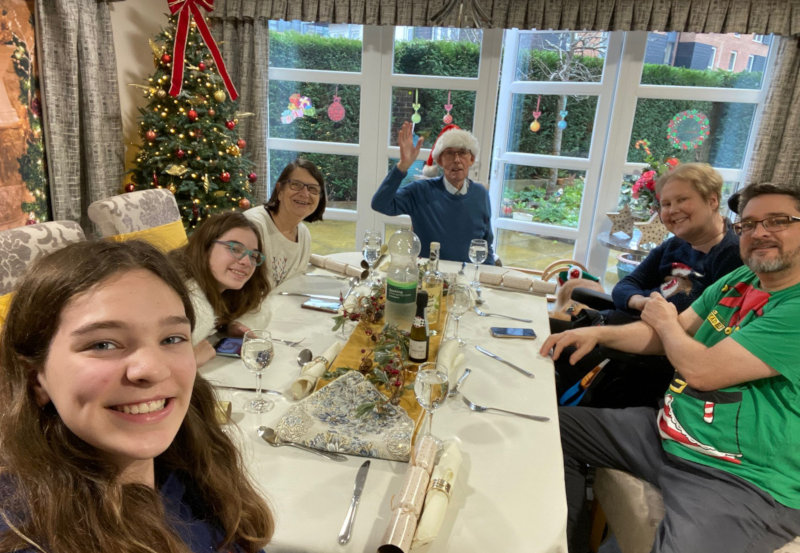
He decided eventually that he ought to enjoy his retirement. There was always a jigsaw on the go and he used to play table tennis every week to keep fit. I think he also tried yoga for a time. Never a social butterfly, he did have a few close friends locally - Graham and family, Eileen and Mike, Dave and his wife - all of whom he used to meet regularly for coffee, local walks and the odd trip to National Trust properties. Graham was Ian’s best friend for over 50 years and they enjoyed many holidays together. Ian and I used to meet up during school holidays to go to exhibitions, the theatre and the cinema. Occasionally when visiting his partner, Marion, we would meet up half-way to enjoy a meal together. We were always invited to his birthday celebrations which were held in a local hostelry or restaurant and were an opportunity for us to meet as a family.
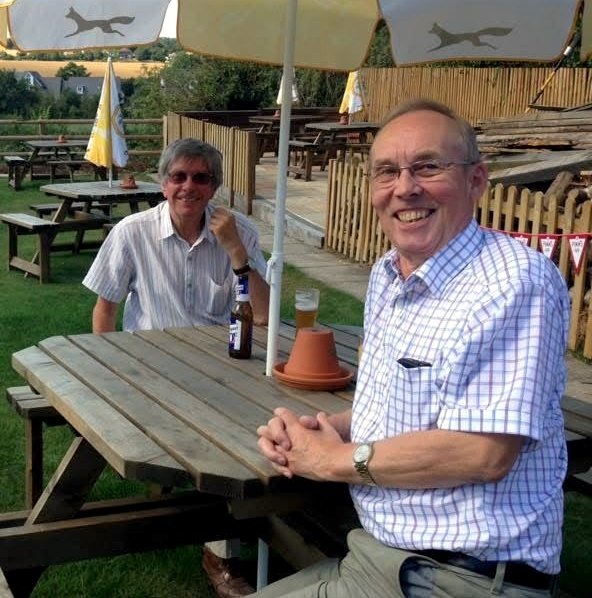
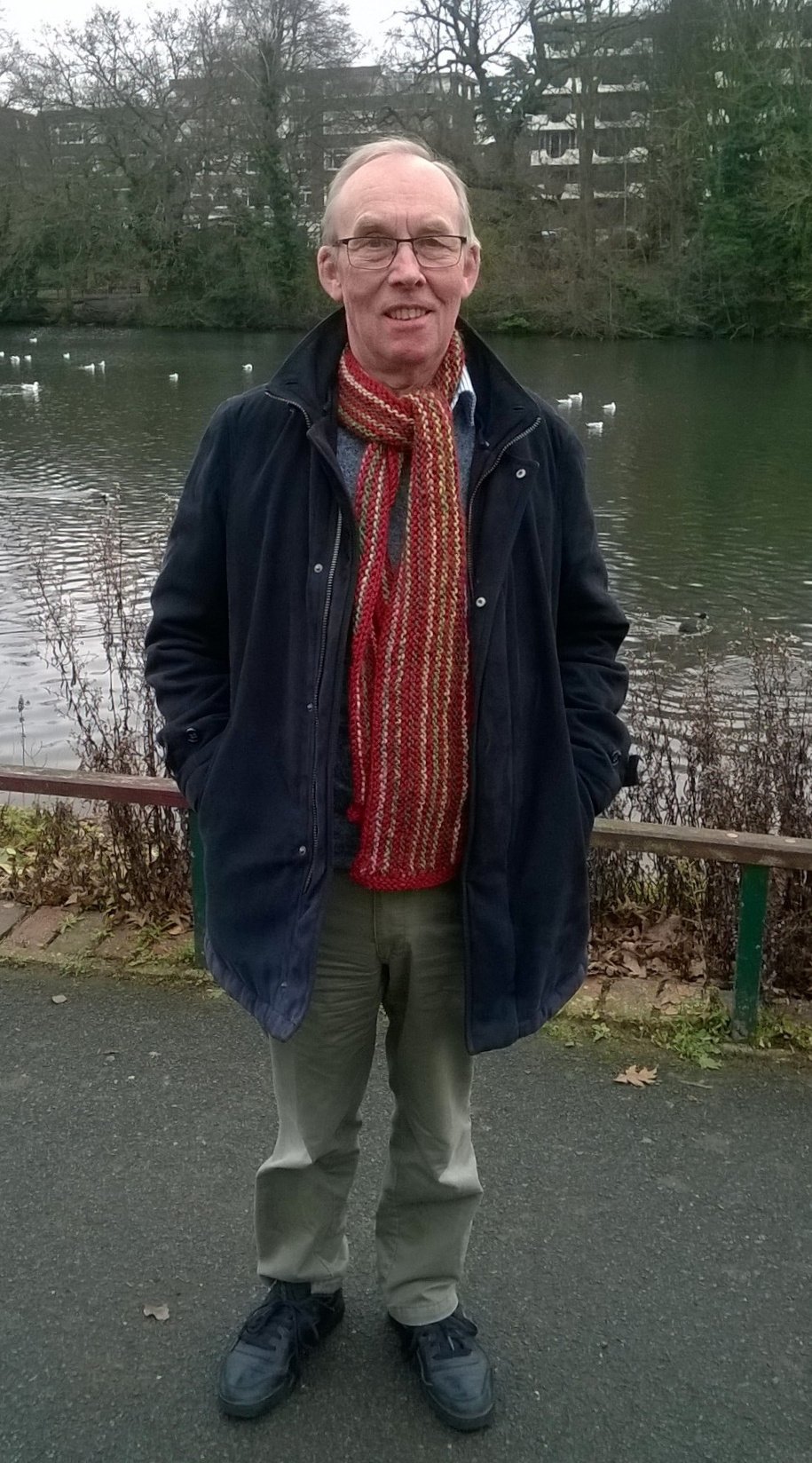
Ian was a quiet and unassuming man. He was many things to many people – a caring friend, a loving and much-loved father and grandad, but to me he was my big brother and even if I didn’t see him very often he was always there. We will all miss him greatly.
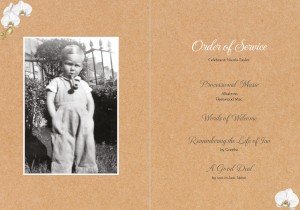
“A Good Deal”
A tribute from Steve.
Ian was my father-in-law.
When I got married, Ian came as part of the deal.
It took a long time to get to know him but it was definitely worth it.
My life is better having had Ian in it.
He struggled with depression and social anxiety all of his life but for those of us who got to know him, he was an intelligent, gentle and caring man, always ready with a self-effacing smile.
Through the arrival of his granddaughters and the illness of his daughter, we have become very close.
He would often make the effort to visit us for a meal or just a cup of tea.
He was always keen to visit but never liked to stay too long and usually parted with “I’ll be off now, then”.
He also liked to host lunches for his granddaughters who were great admirers of the sticky rice from his rice cooker.
He was a quietly brilliant biochemist who co authored many scientific papers.
He enjoyed passing on his knowledge by teaching others.
He was an avid reader with interests in history, science, current affairs and the odd thriller.
He was very supportive of Natasha and Zoe’s endeavours in the performing arts and kept programs from every musical they were in.
He liked to travel, with Thailand and Eastern Europe as his favourite places.
Having been born in the Isle of Man, it held a special place in his heart and we enjoyed a lovely holiday there together where he showed us around.
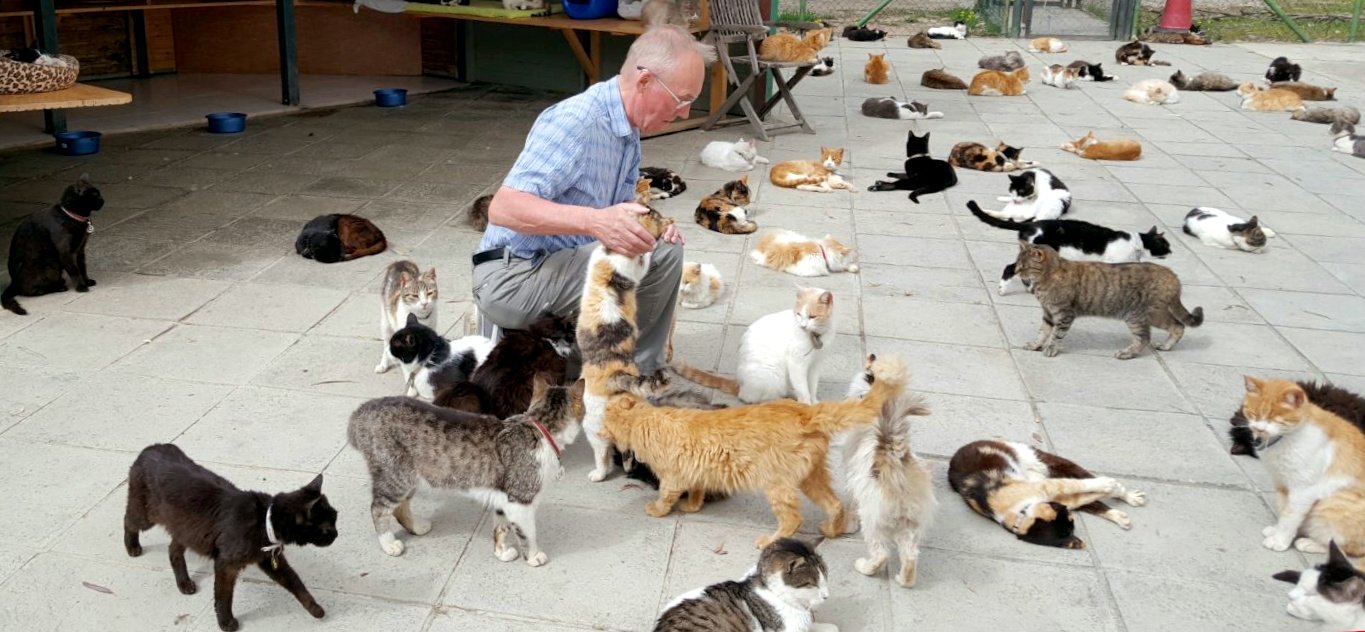
His granddaughters knew him as Grandad Cat because he loved them and often owned one
He once looked after our hamster when we went on holiday and he has always been welcoming of our golden retriever, Tamsin.
We would have liked some more time with you, Grandad Cat.
We loved you.
We will miss you.
A tribute from Marion
About twenty years ago, in the early days of dating websites, I thought I’d give it a go, and came across Ian’s profile, which I believe Heather had encouraged him to post. He was a bit dubious about the geographical distance between us, but we agreed to meet for the first time at a roughly mid-distance venue – the restaurant in John Lewis in High Wycombe. Not
romantic, but safe. Half-way through lunch, as arranged, my son called to ask if I was OK; I didn’t think that Ian posed any danger. He struck me as reserved and quiet, but polite and
kind, and I could see that there was depth beneath this serious exterior. Further phone calls and emails confirmed this and in time we were visiting one another at our homes every few
weeks, with all the excitements that the M40 and M25 can deliver.
I remember the first time I went to his home I got hopelessly lost, - this was before I had a sat nav - and, after driving round and round Croydon for what seemed like hours I managed to find somewhere to park to call him. He asked me if had passed the Fairfield Halls and what he should do about the gammon joint he was boiling for lunch. I replied “At least six times and turn the gammon off!” He got out his A-to-Z and led me to his home.
At that time Ian had retired from his job, and I confess that, with my lack of scientific knowledge, I never did understand exactly what it was that he did. He wanted to do some work, however, and was working part-time in the library of a local secondary school.
We continued our relationship with frequent weekend visits and phone calls. We enjoyed days out at National Trust properties and gardens, and got to know one another’s friends
and families when we gathered for lunches, weddings and outings.
Over the years we
supported one another through the good times and the bad. Even through his darkest hours he wanted to hear what was going on in my day.
We had several holidays together. I especially enjoyed visiting the Isle of Man, where Ian had spent his childhood, and the sites of the varied jobs of his school and university years – a pig farm, a photographer’s and the famous Manx Railway. When Ian’s school friend, Audrey, moved back to the island she and Ken welcomed us to stay at their house, as they did when they were in Rutland.
When my daughter, Becky, was living in Cyprus we visited her family, we went to Italy, to Scotland, to Wales and to Yorkshire, sometimes on rail trips.
As age started to creep up on us, I stopped driving, and couldn’t manage public transport and then Ian found driving the hundred miles to my house difficult, so would visit me by train. With his failing health I knew he found it a challenge, but he continued until earlier this year. We kept up our relationship with daily phone calls, and this went on until a few days before he died.
Ian, you were a loving, kind, and trusted special friend. I miss you.
“Grandad Cat”
by granddaughter Natasha
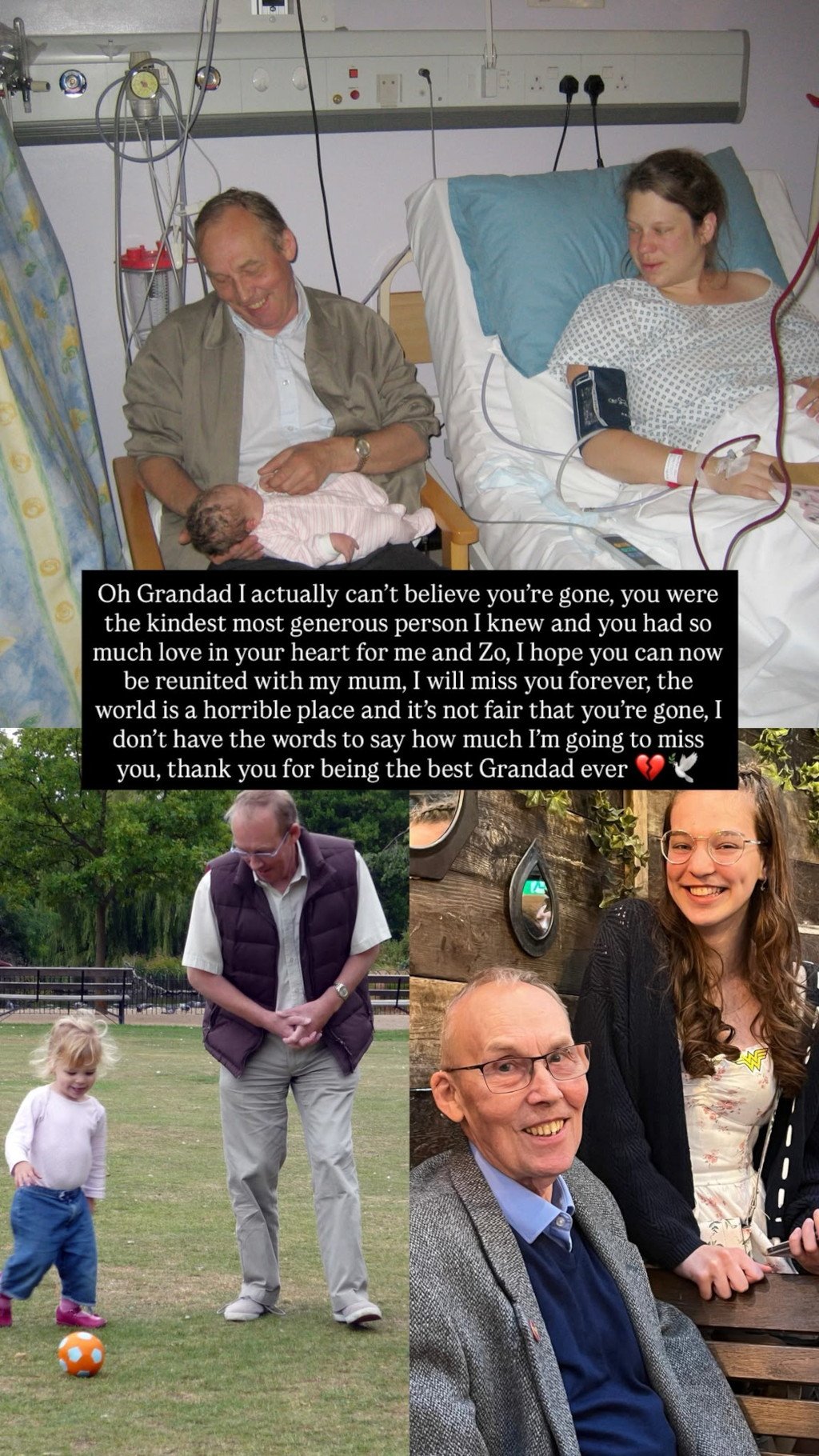
My grandad was the loveliest man ever and I can’t quite believe he’s gone.
I loved him so much and have some of the best memories of him over the years,
from dancing in his living room to the song “Wake Up Little Susie” to regularly going out for lunch with him.
When I was little he used to call me “Tasha Twinkle Toes” and he loved taking me to London!
We went on the cable cars, to the science museum and to see shows.
We loved getting lunch at Wagamama, (which he would always pronounce Waga-maRma).
I remember him taking me to London to visit the Cutty Sark ship and back to his house for giant fish fingers.
I spilt ketchup all over me which he never let me forget.
I would always save a bit of my fish to feed to his cat!!
We used to bake cupcakes, go blackberry picking and go to the squirrel park to feed them monkey nuts!!
We all went to the Isle of Man a few years ago.
It was so special as he got to show us around the island where he grew up.
One day it rained so heavily that we all got soaked but one of my favourite photos is of us at the Laxey Wheel, next to a waterfall, where we both just look so happy.
As I grew up he continued to spoil me.
He loved taking Zoe and I bowling and one of our favourite places to have lunch was Côte Brasserie
- we’d always get steak frites, extra veg’ and chocolate mousse.
He came to see my shows no matter how small or unimportant I thought they were.
He still came and supported me every step of the way.
I loved him so much and I am so grateful for everything he ever did for me.
I will never forget you Grandad,
I’m so glad you can be reunited with my mum and you can look after each other wherever you are.
I love you Grandad Cat.
From the writings of Austrian poet Rainere Maria Rilke
We, of the here-and-now, are not for a moment satisfied in the world of time,
Nor are we bound in it;
We are continually overflowing toward those who preceded us,
Toward our origin and toward those who seemingly come after us.
In that vast “open” world, all beings are -
One cannot say “contemporaneous,”
For the very fact that time has ceased determines that they all are.
Everywhere transience is plunging into the depths of Being ...
It is our task to imprint this temporary, perishable earth into ourselves so deeply, so painfully and passionately,
That its essence can rise again, "invisibly," inside us.
We are the bees of the invisible.
We wildly collect the honey of the visible,
To store it in the great golden hive of the invisible.
...
Death is the side of life turned away from us and not illuminated.
We must try to achieve the greatest possible consciousness of our existence,
Which is at home in both unlimited realms,
And inexhaustibly nourished by both.
The true form of life reaches through both regions;
The blood of mightiest circulation pulses through both:
There is neither a Here nor a Beyond,
But only the great unity,
In which those beings, who surpass us, are at home.
The UK’s leading cat welfare charity, helping thousands of cats every year.
Dr Ian Pull, Biochemist.
1965 BSc. Class II, Div. 1. Biochemistry, University of Liverpool.
1972 PhD. Faculty of Science, University of London.
2000 CELTA certificate of English language teaching, University of Cambridge examination board.
Quality and Technical Consultant,
ImmunoDiagnostic Product Co.Ltd.
Volunteer Occupational Therapy assistant,
Croydon Social Services.
English language supply teaching.
1978 - 2000 Principal Biochemist at the North East Thames Region Immunoassay Unit (NETRIA).
NETRIA was a self-funding NHS unit concerned with the co-ordinated development and expansion of immunoassay services within the North East Thames region by provision of validated immunoassay methods and materials.
Reagents for immunoassays and training were also provided to a further 70 laboratories in this country and overseas.
Areas of Responsibility
General laboratory and production management, supervision of staff.
Quality assurance and compliance with Good Laboratory Practice.
Assay development, validation and selection of materials and equipment.
Production of materials and methods for diagnostic immunoassays.
Preparation of radiolabelled materials and radiation protection.
Preparation of liquid and solid phase antibody preparations.
Preparation of assay calibrants and controls.
Teaching on training courses and supervision of overseas students.
Overseas teaching and training when required.
Principal Achievements
Planning and implementation of an inter-laboratory Quality Assurance Scheme.
Developing production of an early immunometric TSH assay which is still successfully employed in developing countries.
Development of neonatal thyroxine, TSH and 17α-hydroxyprogesterone methods in solid phase formats.
Contract preparation and documentation of neonatal TSH controls for a commercial diagnostics company.
Participation in the training of 60 students visiting from countries across the world.
Previous Appointments
1965-1966 MRC Research Scholar,
Biochemistry Department, Institute of Psychiatry, University of London.
1966-1975 Research worker with Lecturer status,
Biochemistry Department, Institute of Psychiatry, University of London.
1975-1978 Basic Grade Biochemist,
Department of Chemical Pathology, Bethlem Royal and Maudsley Hospitals, London.
1978-1989 Senior Biochemist and Radiation Protection Officer,
NETRIA, St. Bartholomew’s Hospital, London.
1990 Principal Biochemist,
North East Thames Region Immunoassay (NETRIA) Unit.
Overseas Teaching Appointments
by the International Atomic Energy Agency, Vienna.
1986 Technical Co-operation Expert.
Office of Atomic Energy for Peace, Bangkok, Thailand.
Three months training staff and organising a laboratory for RIA reagent preparation.
1986 Regional Training Course on Production and Use of Bulk Reagents for RIA of Thyroid-related hormones.
Bangkok, Thailand.
1989 Regional Workshop on Radioimmunoassay,
Kuwait City, Kuwait.
1990 Two month follow-up mission to
Office of Atomic Energy for Peace, Thailand.
1990 Regional Training Course on Radioimmunoassay,
Damascus, Syria.
1993 Technical Co-operation Expert.
Nuclear Research Centre, Cairo, Egypt.
One month training given for RIA reagent preparation.
Previous Positions and Experience
1975-1978 Basic Grade Biochemist,
Bethlem and Maudsley Hospitals
Gaining experience in all aspects of the department of clinical chemistry.
This included daily management of the laboratory analysing for drugs of abuse. For several periods of time I was responsible for the work of the therapeutic drug analysis section, the routine chemistry section and the section concerned with more specialised analyses including RIA.
Throughout, this work entailed supervision and training of new staff, together with appraisal of new and existing methods of analysis.
I also had an interest in enzyme immunoassay procedures.
1966 - 1975: Research worker with lecturer status,
Biochemistry Department, Institute of Psychiatry, University of London.
Working for a higher qualification, assisting in the department’s research program and supervising the work of two technical staff.
This position carried responsibility for the use and maintenance of a laboratory occupied, at various times, by up to seven people including visiting senior research workers, students and technical staff.
As departmental safety officer I had a responsibility for laboratory safety.
Other Experience
Generally experienced in research methods and techniques applied in biochemical studies. Specific experience is indicated by the listed publications.
Teaching experience has been gained from participation in teaching MSc students and DPM students of London University and I have attended a course for lecturers at the Institute of Education.
For MSc practical classes I have produced and edited instructional video recordings.
Research seminars and much informal instruction in laboratory methods have been given within the Institute of Psychiatry during which time I regularly refereed papers for the Biochemical Journal and Journal of Neurochemistry.
I have presented a lecture on antibody preparation and assessment to a Biochemical Society refresher course.
Preparation of 125I-T4 and 125I-T3 for a Regional RIA Scheme.
Assoc.Clin.Biochem. National Meeting.
Pull, I (1984).
Development and Operation of a Regional Immunoassay Scheme.
Immunoassays for Clinical Chemistry, pages 16-23.
Editors W M T Hunter & J E T Corrie for Churchill Livingstone.
Edwards, R. & Pull, I (1983).
Radioiodination of Proteins by Three procedures: Solid Phase Lactoperoxidase, Chloramine T and Iodogen.
Immunoassays for Clinical Chemistry, pages 277-285.
Edwards, R, Lalloz, M. & Pull, I (1983).
A Regional Inter-Laboratory Radioimmunoassay Quality Control Scheme.
Third European Congress of Clinical Chemistry.
Pull, I & Edwards, R (1979).
Devolution of RIA to the Routine Clinical Chemistry Laboratory.
Third European Congress of Clinical Chemistry.
Edwards, R, Price, J, Lalloz, M & Pull, I (1979).
Adenine Mononucleotides and their Metabolites liberated from and applied to Isolated tissues of the Mammalian Brain.
Neurochemical Res. 2, pages 203-216.
Pull, I. & McIlwain, H (1977).
The metabolism of Adenine derivatives in different parts of the Brain of the Rat and their release from Hypothalamic preparations on Excitation.
J. Neurobiol. 7, pages 109-122.
Sun, M-C, McIlwain, H. & Pull, I (1976).
Centrally acting drugs and related compounds examined for action on output of Adenine derivatives from superfused tissues of the Brain.
Biochem. Pharmacol. 25, pages 293-297.
Pull, I & McIlwain, H. (1976).
Actions of Neurohumoural agents and Cerebral Metabolites on output of Adenine derivatives from Superfused Tissue of the Brain.
J.Neurochem. 24, pages 695-700.
Pull, I & McIlwain, H (1975).
Rat Cerebral Cortex Adenosine Deaminase activity and its Subcellular distribution.
Biochem. J. 144, pages 37-41.
Pull, I & McIlwain, H (1974).
Superfused "beds" of Neocortical derived Synaptosomal Fractions: Adenine Nucleotide content and the Release of 14C Adenine derivatives.
Biochem. Soc. Trans. 2, pages 272-274.
Pull, I & McIlwain, H (1974).
Output of 14C Adenine Nucleotides and their Derivatives from Cerebral Tissues, Tetrodotoxin-resistant and Calcium Ion-requiring components.
Biochem. J. 136, pages 893-901.
Pull, I & McIlwain, H (1973).
Adenine Derivatives as Neurohumoural Agents in the Brain: the Quantities liberated on Excitation of Superfused Cerebral Tissues.
Biochem. J. 130, pages 975-981.
Pull, I & McIlwain, H (1972).
Superfused Cerebral Tissues in Hypoxia: Neurotransmitters and Amino Acid retention; Labile constituents and Response to Excitation.
J. Neurobiol. 3, pages 311-323.
Pull, I, Jones, D A & McIlwain, H (1972).
Chemical investigations of cerebral sodium plus potassium ion stimulated adenosine triphosphatase preparations in relation to membrane structure and active cation transport.
Thesis. University of London.
Pull, I (1972).
Output of 14C Adenine derivatives on Electrical Excitation of Tissues from the Brain: Calcium Ion Sensitivity ans an accompanying Re-uptake process.
Biochem. J. 127, pages 91-96.
Pull, I & McIlwain, H (1972).
Metabolism of 14C Adenine and derivatives by Cerebral Tissues, Superfused and Electrically Stimulated.
Biochem. J. 126,
Pull, I & McIlwain, H (1972).
3-Hydroxybutyrate Dehydrogenase of Rat Brain on Dietary Change and during Maturation.
J. Neurochem. 18, pages 1163-1165.
Pull, I & McIlwain, H (1971).
Release of Adenine derivatives on Electrical Stimulation of Superfused Tissues from the Brain.
J.Physiol.(Lond.) 221, pages 965-973.
McIlwain, H & Pull, I (1971).
Chemical Modification of a Cerebral Sodium plus Potassium Ion-Stimulated Adenosine Triphosphatase Preparation.
Biochem. J. 119, pages 377-385.
Pull, I (1970).
The Cerebral Sodium plus Potassium Ion Stimulated Adenosine Triphosphatase of Bovine Brain and its Microsomal Matrix.
Biochem. J. 119, pages 367-376.
Pull, I & McIlwain, H (1970).
Acylation of a Cerebral Sodium plus Potassium Ion Stimulated Adenosine Triphosphatase Preparation.
Biochem. J. 118, pages 19-20.
Pull, I (1970).
Glutamate, Calcium Ion-Chelating Agents and the Sodium and Potassium Ion Content of Tissues from the Brain.